




It sounds completely insane, but I, a 34 year old female, decided to go on a 7 day surf camp in Costa Rica with zero experience in surfing.
I was traveling to Costa Rica for a bachelorette party and thought, “might as well tack on another week to sightsee and surf”. I was always curious to learn and when I heard that Costa Rica has some of the best beginner friendly waves and plenty of surf culture, I felt this was the perfect moment.
I ended up booking a 7-day beginner surf camp at Witch’s Rock Surf Camp in Tamarindo, and it was one of my favorite experiences in years.

Where to attend Surf Camps in Costa Rica:
Beginner-Friendly Places to Learn to Surf in Costa Rica (And How They Differ)
Here’s how some of the best beginner-friendly spots compare:

Tamarindo (Guanacaste)
Best for: Easy logistics, social vibe, consistent beginner waves
Tamarindo is one of the most popular places to learn—and for good reason. The beach has sandy bottoms (important for beginners), long rolling waves, and tons of surf schools.
What makes it great:
-
Soft, forgiving waves most of the year
-
Tons of instructors and camps (like Witch’s Rock)
-
Walkable beach town with restaurants, nightlife, and cafes
-
Easy access from Liberia airport
What it feels like:
Lively, social, and convenient. If you want surf + smoothies + sunset cocktails, this is your spot.
Good to know:
Because it’s popular, it can get crowded—especially mid-morning. Early lessons are key.
I decided to go with Tamarindo for the perfect mix of great surf camps, ease of transport (flew into Liberia Airport), and personally as a solo female traveler I liked the idea of a more lively and social camp so I would have new friends to hang out with.
Nosara (Playa Guiones)
Best for: Wellness vibes, consistent waves, less party energy
Nosara, specifically Playa Guiones, is famous for its long, gentle beach breaks. It’s one of the most consistent beginner spots in the country.
What makes it great:
-
Huge sandy beach with plenty of space
-
Very consistent waves
-
Strong yoga + wellness culture
-
Beautiful jungle-meets-ocean scenery
What it feels like:
Calm, health-focused, intentional. Think surf in the morning, smoothie bowls, sunset yoga.
Good to know:
It’s more spread out and less walkable than Tamarindo. You’ll likely want a golf cart or car.
Santa Teresa
Best for: Cool, boho energy with solid surf
Santa Teresa has built a reputation as a stylish surf town with strong waves and a laid-back but trendy scene.
What makes it great:
-
Beautiful beaches
-
Good mix of beginner and intermediate waves
-
Chic cafes and boutique stays
What it feels like:
Edgy, international, Instagram-meets-dirt-road surf town.
Good to know:
Some days can be more powerful than Tamarindo or Nosara. Beginners should definitely go out with an instructor here.
Playa Hermosa (near Jacó)
Best for: Quieter experience, quick access from San José
Not to be confused with the Guanacaste Playa Hermosa, this one near Jacó is a consistent surf beach on the Central Pacific coast.
Jaco is the nearby town, about 1.5 hours from San José.
What makes it great:
-
Easy access from the capital
-
Fewer crowds than Tamarindo
-
Strong surf culture
What it feels like:
More local, less polished, more “serious surfer” energy.
Good to know:
Conditions can vary—some days may be better suited for advanced surfers. Definitely check conditions or book instruction.
So… Which One Should You Choose?
It depends on the kind of trip you want:
-
Want social + easy + lively? Tamarindo
-
Want wellness + space + consistency? Nosara
-
Want cool-girl surf town energy? Santa Teresa
-
Want close to San José + lower-key vibe? Jacó/Playa Hermosa
For a total beginner, the most forgiving and straightforward options are usually Tamarindo and Nosara. Both have sandy bottoms, reliable waves, and tons of instructors used to working with first-timers.
Surf Camp vs. Individual Lessons: What’s Better for a Beginner?
If you’re brand new to surfing, one of the biggest questions is whether to commit to a full surf camp or just book a lesson (or a few) while you’re traveling.
Option 1: Individual Lessons
Best for: Curious travelers who want to try surfing without committing.
With individual lessons, you book a 1–2 hour session, learn the basics (pop-up, safety, wave timing), and see if you like it. You can add more lessons after confirming that you enjoy it, want to improve, and continue working with that instructor.
Pros:
-
Lower cost upfront
-
Flexible schedule
-
Great for bucket-list “I tried surfing in Costa Rica!” moments
-
Easy to fit into a broader travel itinerary
Cons:
-
Progress can stall after day one
-
No built-in consistency
-
Less personalized progression
-
Harder to build paddle strength and technique
You’ll probably stand up once or twice (which feels amazing), but without repetition over multiple days, it’s tough to truly improve. Surfing has a steep learning curve, and muscle memory matters.
If you’re short on time, this is perfect. If you want to actually learn to surf, it may leave you wanting more.
Option 2: Full Surf Camp
Best for: People who genuinely want to improve and immerse themselves.
A surf camp isn’t just daily lessons. It’s structured progression. Over my week, we had:
-
Tide-timed morning surf sessions
-
Video analysis (equal parts humbling and helpful)
-
Paddle technique class
-
Surf etiquette class
-
Consistent instructor feedback
The biggest difference? Momentum.
When you surf multiple days in a row, your body adapts. Your paddling gets stronger. Your timing improves. You start recognizing waves before your instructor even tells you to turn.
Pros:
-
Faster progression
-
Same instructor tracking your growth
-
Built-in community
-
Structured learning beyond just “catching waves”
Cons:
-
Bigger time commitment
-
Higher cost
-
Physically demanding (your arms will be tired)
For me, camp created this beautiful rhythm: surf early, refuel, rest, explore, repeat. It turned surfing from a novelty into a real skill I could build.
However, it can be a problem if you show up on day one and realize surfing isn’t for you, and you completely hate it, or your body just isn’t fit enough to surf everyday, but you’ve already committed the money and time to these lessons.
Surf camp is definitely a bigger commitment and you’ll have to work through the hard moments.
There were definitely days where the surf was rougher, and people can get seriously injured so always listen to your body when you need rest. Even in the middle of a lesson you can always let your instructor know and rest on the beach.
Attending surf camp as a 34 year old, Who attends Surf Camps

I had originally flown to Costa Rica for a friend’s bachelorette party. After a few days of celebrations, sunscreen, and amazing animal filled outings, I wasn’t ready to leave. So I extended my trip by a week and a half to travel solo—and booked surf camp for the last week.
Going into it, I wasn’t sure what to expect as a 34-year-old woman traveling alone. Would I feel out of place? Would everyone be 19 and effortlessly cool?
The reality: surf camp attracts all kinds of people. Solo travelers. Couples. Friend groups. People in their 20s, 30s, 40s and beyond. Total beginners. Repeat campers trying to level up.
And from day one, it felt welcoming, supportive, and zero-ego.
They have everyone start on the same day (flexible if you need it to be but i recommend starting with everyone if you can), and your cohort is sorted into:
-
Beginner: total newbies (that’s me!), or people who have surfed once or twice but don’t know how to catch their own waves.
-
Intermediate: can catch your own waves but still want instruction, includes some field trips to different beaches
-
Advanced: experienced surfers who are there for the accommodation close to the beach and organized field trips to good waves, don’t need instructors
Each person has a dedicated instructor, with 1-2 student to instructor ratio. I loved that we had the social aspect with the larger beginner group but the lessons were still super personalized with having a basically private lesson!
The Setup: What a 7-Day Beginner Surf Camp Looks Like

I stayed on property with Witch’s Rock, which made everything incredibly easy. The accommodations are right on the beach and include free board rentals if you want to surf on your own outside of the lessons.
Surf lessons were scheduled around tides and crowd conditions, usually early mornings. A typical day meant:
-
Wake up early
-
Coffee
-
Walk to the beach
-
Surf while the light is soft and the town is still sleepy
After lessons, I’d cash in my one comped meal per day—usually brunch right after surfing. There is something deeply satisfying about eating a giant post-surf breakfast when you’re exhausted and salty.
In the afternoon there might be a video analysis, etiquette class, paddle class, etc. or free time to do whatever like walking / shopping around town. There are also plenty of excursions you can book to go see the amazing wildlife in Costa Rica. Or hop in the rental car and explore other beaches and hiking spots nearby. Beach and pool side chilling is definitely mandatory as you’ll probably be pretty tired after surfing!
My Instructor Val (and Her Very Good Dogs)

I was paired with an instructor named Val, and I adored her instantly.
She was calm, patient, encouraging—and had two extremely cute dogs who occasionally joined us at the beach.
As a total beginner, I really liked her supportive teaching style that knew when to push me and when to send me to the beach for a ten minute break.
The Shock of Standing Up on Day One
I genuinely thought it would take days, if not the full week to stand up on a board.
But on day one, I popped up. Not the most graceful or stylishly, but I was up!
The beginner waves in Tamarindo were forgiving, and the instructors are absolute pros at positioning you and giving you the perfect push-off timing. Once I stood up for the first time, I was hooked and couldn’t wait to paddle back out to do it all again.
Not Every Day Is a Victory Lap
Here’s the honest part: some days were rough.
There were mornings when the waves were choppy and strong. Days when I barely caught anything. Days when I paddled so much my arms felt like noodles. So many times the waves just kept coming and I felt like I was just tumbling and getting pushed around.
Surfing is humbling.
You can feel amazing one day and completely incompetent the next. The ocean does not care about your confidence. But it also is what’s beautiful about being at the mercy of nature.
Some days were great and some were really, really tough.
But you just realized how you can smile though the tough bits, that you sometimes can’t muscle your way though the waves, and sometimes accepting that life’s easier when wait it out before you catch a break to go in.
So.. Can I surf after 7 days?
Kinda!
In the end of the surf camp I was definitely surfing and still needed help spotting a good wave, and getting a push off.
But I was paddling out, turtling under big waves, popping up on the board, turning left and right. Starting to get a handle on controlling my direction.
Full disclosure I have since tried surfing since coming home (in the cold North California waves!) and I didn't catch a single wave. But I blame the thick wetsuit and not having the right board length!
The Extras That Made It Feel Legit
This wasn’t just “go out and try to surf.” The camp included:
-
Video analysis of our sessions (painful but incredibly helpful)
-
Paddle class to build strength and technique
-
Surf etiquette class so you don’t become that beginner
Watching yourself on video is a special kind of character development, but it accelerates learning so much. You see exactly why you missed the wave or why you wiped out.
It makes surfing feel technical, not just chaotic.
What to Pack for Surf Camp
Surf Camp includes board rentals so don't worry about bringing any equipment. If you have a board at home you can message them to see if they have something comparable for you to use.
What to wear during surfing
I liked having a one piece surf suit with long sleeves so I didn't have to worry about bikinis flying off in the rough waves, and they provide extra UV protection. I also brought a sport style bikini that I knew was more secure (mine is from Patagonia) and it was nice to have two sets to switch off so you don't need to squeeze into a cold wet suit in the morning. The waters are warm so you don't need a wetsuit.
For men: board shorts and rash guards are common. The rash guards are great for protecting your skin from the friction rubbing against the board and for sun protection! Some men prefer compression shorts if they're concerned about chaffing.
You'll also want to pack a few more essentials:
- Reef safe sunscreen
- spf lip balm
- Beach towel
- Pair of waterproof sandals / flip flops / slides
- Hat
- Sunglasses
- Bug repellant
- Dry ear drops
- bandaids or tape to cover up any cuts, I liked hydrocolloid style blister bandages because I was getting blisters from digging my feet into the sand
- Aloe vera (just in case! You'll probably need it)
- I brought a pack of electrolyte powders (remainder from the bachlorette party but ended up coming in clutch! I drank one a day)
- Chafe cream (I brought the Megababe Thigh Rescue Anti-Friction Stick and shared with with multiple people in our group and it was a lifesaver!)
- Binoculars (optional but the wildlife is so wonderful in Costa Rica!)
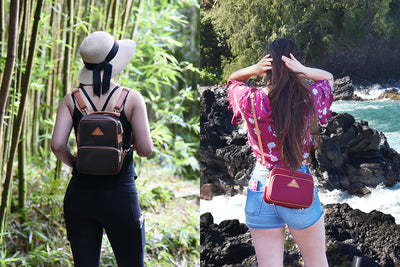
- Anti-theft water resistant bag (I used the Carmel Backpack and Verona Crossbody) Perfect for strolling around town or laying beach side.
Other than packing, I would also recommend doing some conditioning like cardio or body weight exercises since it is very physically taxing to surf so many days in a row as a total beginner.
When is the best time to go Surfing in Costa Rica as a beginner?
If your priority is gentle, beginner-friendly surf and consistent lessons, the dry season (December through April) is ideal — especially early morning sessions when the water is glassy and waves are easiest to ride.
I was there in May at the start of Green (Rainy) season (May–Nov) when the waves start to get bigger. Rain usually rolls in in the afternoon, but mornings often start sunny and surfable. Going off season also meant lower prices and fewer crowds.
Shoulder months Apr & Nov are a bit of a middle ground, with balanced conditions but fewer crowds.
But no matter when you go, Tamarindo usually has something surfable thanks to its geography and consistent swell patterns.
Would I Do It Again?
Absolutely.
Surf camp as a beginner is incredibly humbling and empowering. I was physically exhausted after every surf, and in that total exhaustion I felt more free and happy, content with my progress, however little.
It gave structure to my solo travel week but still left room for spontaneity. It challenged me without overwhelming me. And it reminded me that trying something new, especially something slightly scary, is often the best part of travel.
If you’re sitting on the idea of booking a surf camp alone, consider this your sign.
You might surprise yourself on day one. Pura Vida!







Leave a comment